Orthopedic implants work inside the body, where small manufacturing differences can matter. A hip stem, spinal screw, or knee component must match its design and intended use. Why do orthopedic implants require strict quality control during production? Because material errors, dimensional variation, contamination, or damaged packaging can compromise product performance and patient safety.
Quality checks begin with verified raw materials and continue through machining, finishing, cleaning, and packaging. Teams may inspect critical dimensions, examine surface conditions, and confirm that processes meet approved specifications. Sterilization and packaging controls also need validation and documented monitoring. Traceability links each finished device to its materials, equipment, and production records. Details matter. A tiny burr near a joint surface may be easy to overlook, yet it deserves attention. So does a label that does not match the device inside.
Reliable control depends on trained staff, calibrated tools, clear procedures, and records that accurately reflect the work. Applicable standards and regulatory requirements vary by market and device, so manufacturers must confirm which obligations apply. A checklist helps, but it cannot replace sound judgment or investigation when results seem unusual. Even a well-organized quality system can miss something; that possibility should encourage review, not complacency. This article explores the controls that help manufacturers reduce avoidable variation and build confidence in orthopedic implants.
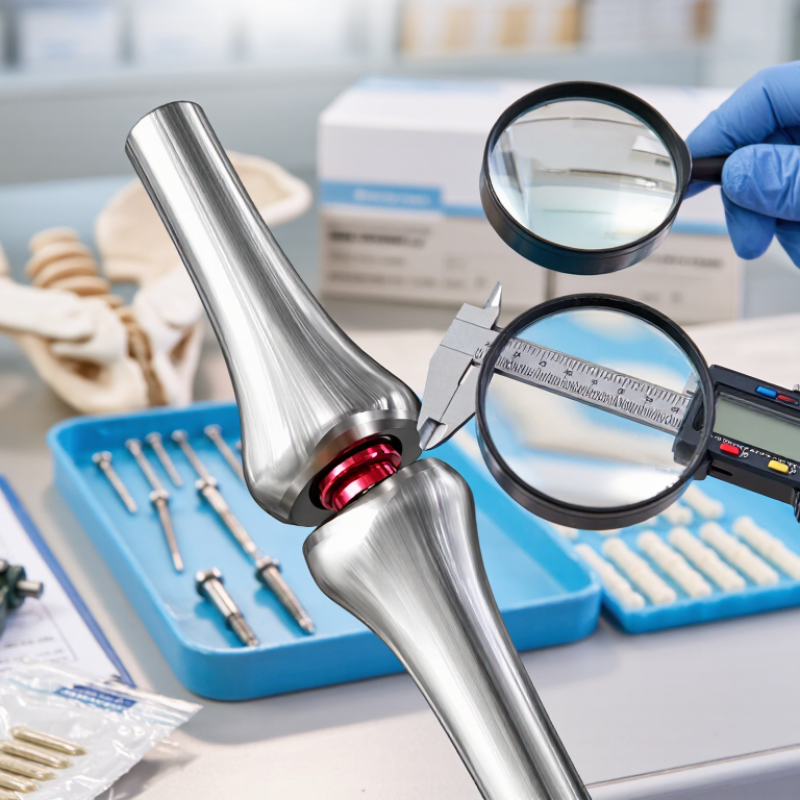
Orthopedic implants are medical devices placed inside or attached to the body to support bones, stabilize fractures, or replace damaged joints. Common examples include metal plates and screws, intramedullary rods, spinal fixation devices, and artificial hips or knees. Materials may include titanium alloys, cobalt-chromium alloys, ceramics, and medical-grade polymers. Each design must suit its task. A plate holds a broken bone steady; a joint prosthesis restores movement when natural joint surfaces are badly worn. Small differences matter.
Surgeons select an implant based on the injury, bone quality, anatomy, and the patient’s daily needs. During fracture repair, screws may secure a plate against the bone, while a rod can sit inside a long bone. In joint replacement, worn surfaces are removed and replaced with components designed to move together. The American Joint Replacement Registry’s 2024 Annual Report included more than 4.8 million hip and knee procedures, illustrating the scale of these treatments in the United States. That figure describes registry data, not every operation performed. Fit is not always perfect. Recovery also depends on surgical technique, rehabilitation, and individual healing, so an implant alone cannot promise a specific result.
| Implant Type | What It Is | Typical Use | Common Materials | Important Quality-Control Checks | Relevant Test or Standard Examples |
|---|---|---|---|---|---|
| Bone plates and screws | Fixation devices that hold bone fragments in position while a fracture heals. | Fracture fixation, osteotomy, and some reconstructive procedures. | Titanium alloys, commercially pure titanium, or stainless steel, depending on the device and application. | Material identity and traceability; dimensions and hole alignment; surface condition; screw fit; mechanical strength; cleanliness; and validated sterilization where supplied sterile. | ISO 5832 series covers requirements for certain metallic implant materials. Applicable mechanical tests depend on the specific device design. |
| Hip joint implants | Components that replace all or part of the hip joint, commonly including a femoral stem and a bearing articulation. | Total or partial hip replacement to relieve pain and restore joint function. | Common combinations include titanium-alloy stems, cobalt-chromium-molybdenum alloy components, and polymer or ceramic bearing surfaces. | Dimensional accuracy and taper fit; material and coating verification; fatigue strength; bearing-surface quality; wear performance; and cleanliness. | ISO 7206 series addresses mechanical testing of hip-joint prostheses; ISO 14242 series addresses wear testing of total hip-joint prostheses. |
| Knee joint implants | Femoral and tibial components, often used with a polymer bearing, that replace damaged joint surfaces. | Partial or total knee replacement, commonly for severe joint damage or arthritis. | Common materials include cobalt-chromium-molybdenum alloy, titanium alloy, and ultra-high-molecular-weight polyethylene. | Component dimensions and alignment features; surface finish; material properties; fixation features; fatigue and wear performance; and polymer quality. | ISO 14879 series covers determination of endurance properties of knee tibial trays; ISO 14243 series addresses wear testing of total knee-joint prostheses. |
| Spinal fixation systems | Rods, screws, plates, or connectors used to stabilize spinal segments. | Stabilization of the spine in selected cases such as deformity correction or fusion procedures. | Commonly titanium alloys or cobalt-chromium alloys; material selection depends on the device and clinical application. | Thread and connection accuracy; dimensional inspection; fatigue and static mechanical performance; material traceability; surface condition; and validated cleaning and sterilization processes. | Mechanical testing should follow the applicable device-specific method. ASTM F1717 is one example of a test method for spinal implant constructs in a vertebrectomy model. |
| Intervertebral body fusion devices | Implants placed between vertebrae to help maintain disc-space height and support spinal fusion. | Selected spinal fusion procedures, as determined by the treating clinician. | May include titanium, polymer materials such as PEEK, or other materials specified for the device. | Overall dimensions and feature geometry; material verification; compression and expulsion-related mechanical performance; surface or porous-feature inspection; and cleanliness. | ASTM F2077 describes mechanical testing of intervertebral body fusion devices. The appropriate test configuration depends on device design. |
| Bone anchors and suture anchors | Small fixation devices that secure sutures or soft tissue to bone. | Selected tendon, ligament, and other soft-tissue repair procedures. | May be made from metals, polymers, or bioabsorbable materials, depending on the design. | Anchor dimensions and thread geometry; insertion and fixation performance; material verification; suture or eyelet integrity; and package integrity for sterile products. | Testing should be selected for the specific design and intended use; there is no single test that applies to every anchor type. |
Quality note: Orthopedic implants are medical devices. Quality programs commonly address design verification, supplier and material controls, manufacturing-process validation, inspection, packaging, and sterilization validation when applicable. ISO 10993 series provides a framework for evaluating biological safety; the appropriate evaluations depend on the device’s materials, contact type, and duration of contact. Standards listed are examples, not a complete compliance checklist.
They are devices placed inside or attached to the body. They support bones, stabilize fractures, or replace damaged joints. Small differences matter.
Common types include plates, screws, rods, spinal fixation devices, and artificial hips or knees. Materials may include titanium alloys, ceramics, and medical-grade polymers.
They consider the injury, bone quality, anatomy, and a patient’s daily needs. Fit is not always perfect.
Screws can fasten a plate against a broken bone. A rod may sit inside a long bone to support it.
Worn joint surfaces are removed and replaced with components designed to move together. Recovery still varies from person to person.
Inspectors measure details such as screw diameter, surface finish, and joint shape. Calibrated tools help check whether parts match specifications.
Material analysis checks alloy composition. Mechanical tests examine strength under repeated loads. Wear, corrosion, packaging, and sterilization may also be checked.
No. Lab tests cannot fully reproduce bone quality, surgical technique, or years of movement. A checklist can still miss an unexpected problem.
A 2024 US registry report included more than 4.8 million hip and knee procedures. That figure does not represent every operation performed.
Orthopedic implants, including joint replacements, plates, screws, and spinal devices, help restore movement, stabilize bones, and support healing. In 2026, leading implant designs are shaped by material strength, biocompatibility, durability, and suitability for the patient’s anatomy and activity level. Why do orthopedic implants require strict quality control during production? Because small flaws in materials, dimensions, or manufacturing processes can affect how an implant fits and performs over time.
Quality control combines material checks, dimensional measurements, manufacturing inspections, and performance testing to verify safety and consistency. Approval pathways rely on applicable standards and tests, which may assess mechanical strength, wear, corrosion resistance, and biological compatibility. Surgeons can evaluate quality by reviewing clinical evidence, device documentation, and the implant’s suitability for a patient’s needs. Patients can ask about expected benefits, risks, alternatives, and follow-up care, then make decisions with their healthcare team.

 Marin-one Medical