How to Check China Orthopedic Implant Compatibility?

Time:2026-10-07 Author:Liam
0%

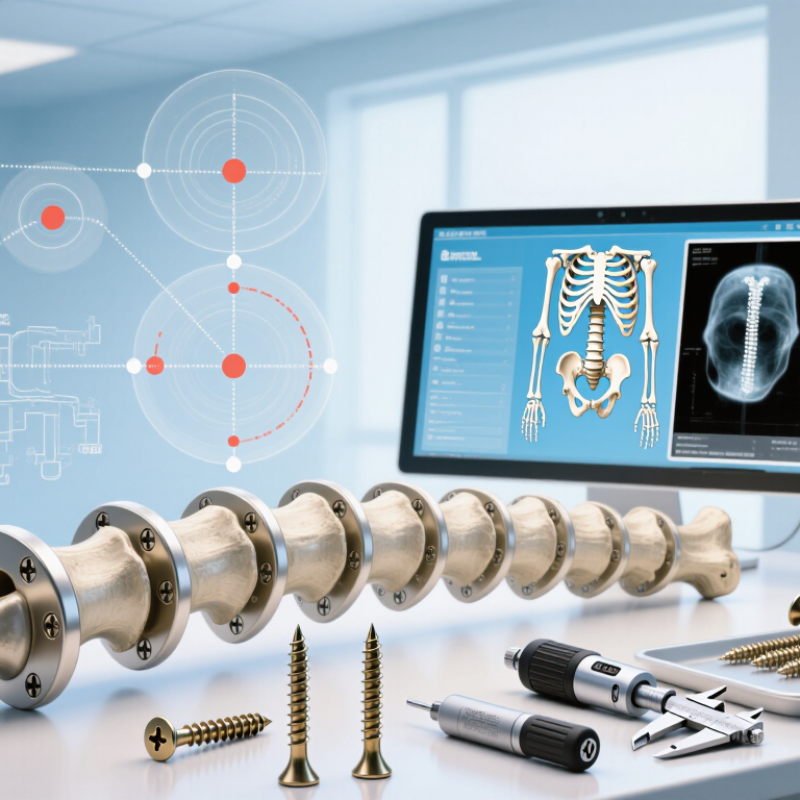
Choosing an orthopedic implant in China involves more than matching size and anatomy. Compatibility must connect the implant, surgical instruments, imaging systems, and hospital workflows. A titanium plate may fit the bone, yet its screws may not fit the available driver. A navigation system may also require specific markers, software, or file formats. Small mismatches can delay surgery.

This guide explains how to check if orthopedic implants are compatible with local medical equipment. It covers implant dimensions, material information, instrument interfaces, sterilization limits, imaging visibility, and documentation. Experienced surgeons, biomedical engineers, and procurement teams should review these details together. Their practical feedback often reveals problems that product brochures miss. Ask for validated technical drawings, connection specifications, test reports, and instructions for use. Confirm whether local hospitals can sterilize, store, and monitor the implant system correctly. Check whether imaging equipment can safely display the implant and whether artifacts could affect follow-up care.

Do not rely on appearance alone. A familiar connector can hide a different tolerance. A translated manual may also omit an important warning. That is easy to overlook. Compatibility should be confirmed through documented testing, supplier communication, and clinical risk assessment. Local regulatory registration and hospital approval may also apply before use. Requirements can differ between facilities. This article offers a careful starting point, not a substitute for professional judgment. Even a well-designed compatibility checklist may miss an unusual operating-room constraint. Recheck the details before surgery.

How to Check China Orthopedic Implant Compatibility?

Define Compatibility by Anatomy, Load, Fixation, and MRI Conditions

How to Check China Orthopedic Implant Compatibility?

Compatibility starts with anatomy, not the product label. Review recent X-rays or CT scans to measure bone length, canal width, curvature, and surgical landmarks. Compare the implant dimensions with the patient’s actual anatomy, including the correct side and available soft-tissue space. A quick size match can still mislead.

Load requirements also matter. Consider body weight, activity level, bone quality, and the expected forces at the surgical site. A knee, spine, and trauma construct face different stresses. Check whether the fixation method can resist bending, rotation, and repeated loading. The surgeon should confirm screw paths, thread engagement, plate contour, and the bone-implant interface. Small errors matter.

MRI conditions require separate verification. Read the current technical documentation for MR labeling, field strength, scan limits, heating, torque, and artifact behavior. The complete construct matters, including screws, rods, cages, and any retained components. Ask radiology staff to review the planned scan parameters before imaging. This process is not flawless. Measurements vary between scans, and old implant records may be incomplete. When information conflicts, pause and involve the surgeon, radiologist, and qualified biomedical specialist. Do not rely on appearance alone.

Verify NMPA Registration and GB/T 16886 Biological-Safety Evidence

How to Check China Orthopedic Implant Compatibility?

Verify NMPA Registration and GB/T 16886 Biological-Safety Evidence

Compatibility starts with identity, not appearance. Confirm the implant’s NMPA registration certificate, product name, model, size range, material, and manufacturing site. Match every detail with the supplied device and packaging label. A certificate may cover only specific models. Do not assume nearby sizes are included.

Then review the biological-safety evidence under the GB/T 16886 series. The report should identify the exact material, surface treatment, sterilization method, and patient-contact duration. Check evidence for cytotoxicity, sensitization, irritation, systemic toxicity, genotoxicity, and implantation when relevant. Orthopedic implants usually require deeper evaluation because bone contact can be long-term. The test laboratory, sample description, extraction conditions, and acceptance criteria also matter. Missing attachments are a warning sign.

The World Health Organization reports that about one in ten patients experiences harm during healthcare, while more than half of such harm is preventable. This supports a careful document review, not a rushed purchasing decision. NMPA statistical publications also show China’s device market contains a large and expanding pool of registered and filed products. More choices do not mean equal evidence quality. In practice, I would request the original registration documents and compare them line by line. A clean-looking report can still hide an outdated formulation or incomplete test scope. My checklist is not perfect, especially when translations are poor. That is where an independent biological-safety specialist should recheck the file.

Compare Ti-6Al-4V, Co-Cr, and 316L Alloys Under ISO 5832 Data

How to Check China Orthopedic Implant Compatibility?

Material compatibility begins with the alloy, not the country of manufacture. Under ISO 5832-3, Ti-6Al-4V commonly requires at least 860 MPa tensile strength and 780 MPa proof strength. It is lightweight, highly corrosion resistant, and often suitable for plates, screws, and stems. ISO 5832-1 stainless steel, usually 316L, lists approximately 490 MPa tensile strength and 190 MPa proof strength. It offers good ductility, but its nickel content needs careful review for sensitive patients. ISO 5832-4 Co-Cr-Mo cast alloy provides high wear resistance and stiffness. Its typical minimum tensile strength is about 655 MPa. These figures are material requirements, not complete implant-performance results.

Ask the Chinese manufacturer for the exact ISO edition, heat-treatment records, chemical analysis, and lot-specific mechanical testing. Check whether the supplied material is wrought, cast, or forged. That detail changes the comparison. Also review fatigue data, surface treatment, magnetic resonance testing, and sterilization validation. A certificate showing “316L” alone is weak evidence. In practice, I would match the material certificate against the implant drawing and packaging label. Small mismatches can become expensive investigations. ISO 5832 does not replace biological evaluation under ISO 10993 or risk management under ISO 14971.

Tips: Compare yield strength, fatigue strength, corrosion results, and radiographic visibility. Request independent laboratory reports when values look unusually high. Do not assume Ti-6Al-4V is always safer. Patient history, fixation load, and mixed-metal contact still matter. One overlooked interface can change the decision.

How to Check China Orthopedic Implant Compatibility? Compare Ti-6Al-4V, Co-Cr, and 316L Alloys Under ISO 5832 Data

How to read this chart: The comparison uses minimum mechanical requirements commonly specified in ISO 5832 for wrought orthopedic implant materials. Ti-6Al-4V provides the highest minimum tensile strength, while 316L stainless steel provides the highest minimum elongation.

Compatibility note: Mechanical performance alone does not establish implant compatibility. Final selection should also consider corrosion resistance, fatigue behavior, wear, magnetic response, manufacturing condition, sterilization, patient anatomy, and the applicable ISO 5832 material certificate.

Reference framework: ISO 5832-1 for 316L stainless steel, ISO 5832-3 for Ti-6Al-4V, and ISO 5832-4 for cobalt-chromium-molybdenum alloy. Values shown are minimum specified tensile strength and elongation requirements and should be verified against the applicable standard edition and material condition.

Check Hip Geometry Against ISO 7206 and Spinal Constructs Against ASTM F1717

How to Check China Orthopedic Implant Compatibility?

For hip implants, compare the proposed geometry with the applicable ISO 7206 requirements. Review stem length, neck angle, offset, taper dimensions, and critical radii. Use controlled drawings, inspection reports, and calibrated measuring equipment. Small mismatch, big risk. A digital model may appear accurate, yet a wrong datum can distort the comparison. Confirm whether the selected ISO 7206 part matches the implant design and planned test condition.

For spinal constructs, assess the complete assembly against ASTM F1717. This standard uses a vertebrectomy model to evaluate construct performance under defined loading conditions. Recreate the intended screw positions, rod spacing, connectors, and interbody support. Record torque values and assembly steps. Do not test isolated parts when clinical performance depends on the full construct. The result should include fixture details, specimen history, load configuration, failure mode, and test environment.

Compatibility also requires more than passing a bench test. Check material combinations, imaging requirements, surgical instruments, packaging, sterilization effects, and manufacturing tolerances. Compare Chinese supplier records with the approved technical drawing. Ask for traceable measurements, not only a declaration of conformity. Do not guess. A careful review may reveal that two components fit geometrically but behave differently under load. That uncomfortable finding deserves further testing, not a convenient approval. Have an independent qualified laboratory review the protocol before formal verification.

How to Check China Orthopedic Implant Compatibility?

Check Hip Geometry Against ISO 7206 and Spinal Constructs Against ASTM F1717

1. Hip Implant Geometry Compatibility Screening

The following dimensions are suitable for a preliminary dimensional review. Final compatibility requires controlled drawings, validated tolerances, material verification, and testing in accordance with the applicable ISO 7206 requirements.

Check Item Reference Standard Example Measured Value Unit Compatibility Check Technical Review Point
Femoral head nominal diameter ISO 7206 series 32.00 mm Recorded Confirm compatibility with the mating acetabular bearing and verify the actual diameter tolerance on the controlled drawing.
Femoral head sphericity deviation ISO 7206 series ≤ 0.02 mm Review Measure at multiple angular positions using calibrated metrology equipment; apply the approved product specification.
Head center to stem reference-axis offset ISO 7206 series +4.0 mm Recorded Check restoration of femoral offset, leg length, and center of rotation against the intended design configuration.
Neck-shaft angle ISO 7206 series 135 degrees Review Confirm the angle from the controlled engineering drawing and evaluate its influence on loading and impingement.
Proximal neck cross-section ISO 7206 series 12.5 × 10.0 mm Recorded Compare width, thickness, fillets, and transitions with the receiving component and the fatigue-test configuration.
Modular taper engagement length ISO 7206 series 15.0 mm Required Verify taper geometry, engagement depth, angular form, surface condition, and dimensional compatibility; nominal diameter alone is insufficient.
Stem overall length ISO 7206 series 145 mm Recorded Confirm that the stem length and distal geometry match the intended fixation and test-fixture configuration.
Stem distal width ISO 7206 series 9.5 mm Review Check distal clearance, canal preparation assumptions, and any geometry that may alter bending stiffness.
Stem surface and material identification ISO 7206 series Titanium alloy; porous-coated region documented — Required Confirm material grade, heat treatment, coating region, coating thickness, and traceability before mechanical comparison.
Femoral component fatigue-test configuration ISO 7206 series Configuration-specific — Required Use the worst-case clinically relevant geometry and loading configuration; do not infer fatigue performance from geometry alone.

2. Spinal Construct Compatibility Screening

ASTM F1717 evaluates spinal implant assemblies in a vertebrectomy-model test configuration. Construct dimensions, interfaces, and test setup must be defined before comparing results.

Check Item Reference Standard Example Construct Data Unit Compatibility Check Technical Review Point
Number of instrumented levels ASTM F1717 2 levels levels Recorded Document the intended levels and ensure that the comparison construct uses the same configuration.
Rod nominal diameter ASTM F1717 5.5 mm Recorded Confirm rod diameter, cross-section, material, heat treatment, and compatibility with the connector interfaces.
Rod span between fixation points ASTM F1717 50 mm Review Maintain the specified span and alignment because construct stiffness is strongly affected by rod length and placement.
Pedicle screw nominal diameter ASTM F1717 6.5 mm Recorded Record the nominal diameter, thread form, length, material, and engagement with the test block or vertebral model.
Pedicle screw effective length ASTM F1717 45 mm Review Use the same effective fixation length and insertion depth when comparing construct performance.
Interbody spacer height ASTM F1717 10 mm Recorded Document spacer height, footprint, material, and position because they influence load transfer and construct stiffness.
Cross-connector presence ASTM F1717 Absent — Required Do not compare a construct with a cross-connector against one without it unless the test plan identifies the difference.
Locking-interface engagement ASTM F1717 Full engagement; torque recorded — Required Record tightening method, applied torque, locking sequence, thread condition, and any final gap at the interface.
Static compression-bending test ASTM F1717 Load and displacement to be measured N / mm Required Report construct stiffness, yield or failure load, failure mode, fixture details, and specimen conditioning.
Static torsion test ASTM F1717 Torque and angular displacement to be measured N·m / degrees Required Use the same construct alignment, boundary conditions, and failure-definition criteria for a valid comparison.
Fatigue test condition ASTM F1717 Documented test plan required — Required Record cyclic load, load ratio, frequency, number of cycles, environment, interruptions, and observed failure mode.
Failure location and mode ASTM F1717 No fracture or loosening observed in screening record — Review Inspect rods, screws, connectors, locking elements, spacer interfaces, and fixation blocks after testing.
Compatibility decision rule: A dimensional match does not establish clinical, mechanical, or regulatory compatibility. Confirm controlled drawings, tolerances, materials, mating interfaces, sterilization effects, test-fixture equivalence, and applicable acceptance criteria before approving an implant configuration.
Recorded Dimension or configuration documented Review Engineering comparison required Required Verification evidence required before approval

Confirm Sterilization, UDI, Packaging, and Lot-Traceability Compliance

How to Check China Orthopedic Implant Compatibility?

Compatibility begins with controlled documentation, not appearance. Confirm the implant material, dimensions, surface treatment, and intended anatomical use. Then review sterilization records for the exact product and production lot. The method should match the validated packaging system and stated shelf life. Check whether sterilization is terminal or performed by another qualified facility. Ask for cycle parameters, validation evidence, and release records. A clean certificate alone may not prove process control.

Tips: Scan the UDI on the label and compare it with the device record. Check the lot number, manufacturing date, expiration date, and sterilization status. Inspect the pouch, tray, and seal under good lighting. Look for punctures, moisture, lifted seals, or unclear printing. Keep photographs and signed inspection notes. Small details matter.

Traceability should connect the implant to raw materials, inspections, sterilization, packaging, and shipment records. Confirm that the UDI format supports the destination market’s requirements. Requirements can differ, so local regulatory review remains necessary. Ask whether recalled lots can be identified quickly. A supplier may provide complete files, yet an outdated revision can still create confusion. We have seen teams trust a spreadsheet without checking the physical label. That step is easy to miss. Before clinical use, an independent quality professional should review compatibility evidence and unresolved discrepancies.

FAQS

What is the first step in checking orthopedic implant compatibility?

Start with the patient’s anatomy, not the product label. Review recent X-rays or CT scans. Measure bone length, canal width, curvature, and surgical landmarks. Confirm the correct side and soft-tissue space.

Why can a quick size match be misleading?

Similar dimensions do not prove compatibility. A component may fit visually but contact bone incorrectly. Small errors can affect fixation, movement, and loading. Appearance alone is weak evidence.

Which patient factors affect implant loading?

Consider body weight, activity level, bone quality, and the surgical location. Knee, spine, and trauma constructs experience different forces. Check resistance to bending, rotation, and repeated loading. Real bodies vary.

What fixation details should the surgeon review?

Review screw paths, thread engagement, plate contour, and the bone-implant interface. Confirm that screws reach suitable bone. Check whether the construct remains stable during expected movement. Small mistakes matter.

How should MRI compatibility be verified?

Read current technical documentation for field strength, heating, torque, scan limits, and image artifacts. Review the complete construct, including screws, rods, cages, and retained components. Radiology staff should assess planned scan settings.

What should be done when implant records are incomplete?

Pause the evaluation when records conflict or important details are missing. Ask the surgeon, radiologist, and qualified biomedical specialist to review the case. Old files may be inaccurate. Do not guess.

Which geometric features matter for hip implant review?

Compare stem length, neck angle, offset, taper dimensions, and critical radii. Use controlled drawings and calibrated measuring equipment. Verify the correct test configuration. A wrong measurement reference can distort everything.

How should spinal constructs be assessed?

Evaluate the complete assembly under defined loading conditions. Recreate screw positions, rod spacing, connectors, and interbody support. Record torque values, assembly steps, failure modes, and test conditions. Isolated parts may mislead.

Does passing a mechanical test prove full compatibility?

No. Also review material combinations, imaging needs, instruments, packaging, sterilization effects, and manufacturing tolerances. Compare supplier records with approved drawings. Independent laboratory review can expose uncomfortable gaps. Clearance is not certainty.

Conclusion

Checking orthopedic implant compatibility requires more than matching dimensions. First, define compatibility by anatomy, expected load, fixation method, and the patient’s MRI conditions. Then confirm that the implant has valid NMPA registration and documented biological-safety evidence under GB/T 16886. Material selection should be supported by ISO 5832 data, comparing the strength, corrosion resistance, and tissue considerations of Ti-6Al-4V, Co-Cr, and 316L alloys. The review should also ask: How to check if orthopedic implants are compatible with local medical equipment? This includes verifying interface dimensions, instrument fit, imaging limitations, and hospital equipment requirements.

For procedure-specific assessment, compare hip implant geometry with ISO 7206 criteria and evaluate spinal constructs using ASTM F1717 test data. Before approval, confirm sterilization validation, UDI information, packaging integrity, expiration controls, and complete lot traceability. A structured review involving surgeons, biomedical engineers, procurement teams, and quality personnel can reduce compatibility risks and support safe, documented clinical use.

Liam

Liam

Liam is a dedicated marketing professional with a profound expertise in the industry, where he excels at highlighting the unique advantages of our core products. With a keen understanding of market trends and consumer needs, Liam frequently updates our company’s professional blog, providing......