China Top Orthopedic Implant Packaging for Safe Shipping

Time:2026-10-02 Author:Charlotte
0%

Orthopedic implants may travel thousands of miles before reaching a hospital. During that journey, cartons face vibration, drops, compression, humidity, and sudden temperature changes. A polished titanium joint component can still suffer damage from a small impact. Its sterile barrier may also weaken without visible cracks.

This raises an important industry question: What is the role of packaging in protecting orthopedic implants during shipping? Packaging should immobilize the implant, absorb external energy, limit contamination, and preserve clear identification. It must also support controlled handling at warehouses, airports, and operating rooms. Dr. Scott Sutton, a recognized medical-device packaging specialist, puts it plainly: “Packaging is a system, not merely a box.”

That principle matters for China’s orthopedic implant packaging sector. Reliable suppliers combine molded trays, medical-grade barriers, cushioning layers, and durable outer cartons. They should verify designs through vibration, compression, drop, and environmental testing. Packaging records, batch markings, and inspection steps strengthen traceability. Small details matter. A loose tray can become a serious problem.

However, no package removes every shipping risk. Human handling varies. Routes change. Some designs may pass laboratory tests but need improvement in real distribution conditions. Experienced manufacturers should review transport data and update packaging when failures appear. They should also communicate openly about test limits, material choices, and storage requirements.

Safe shipping is therefore a shared responsibility. The package protects the implant, supports sterility, and helps clinical teams trust its condition upon arrival. That trust must be earned.
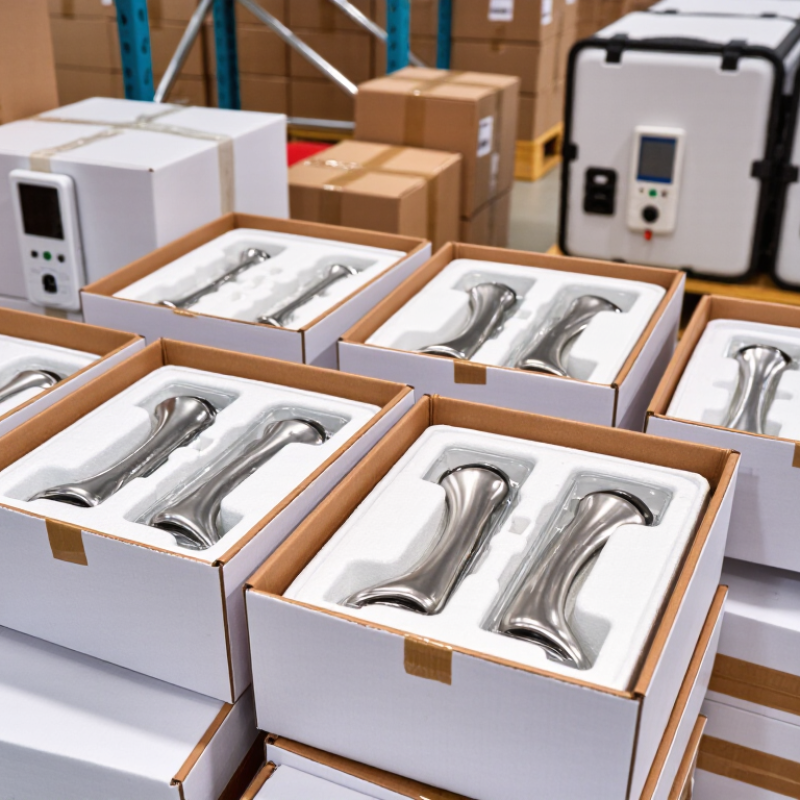
China Top Orthopedic Implant Packaging for Safe Shipping

What Orthopedic Implant Packaging Is and Why Safe Shipping Matters

Orthopedic implant packaging protects devices from damage, contamination, and loss of traceability. Depending on the device, it may include a medical-grade pouch, rigid tray, lid, cushioning insert, and shipping carton. Each layer serves a different purpose. The inner package supports sterility or controlled cleanliness. The outer carton absorbs handling stress. Small gaps matter.

Safe shipping begins with realistic risk assessment. Packages may face vibration, compression, drops, humidity, and sudden temperature changes. A well-designed system keeps implants fixed without applying excessive pressure to delicate surfaces. Clear labels also help warehouse teams confirm the device, quantity, orientation, and handling requirements. For sterile products, validated sealing and barrier performance are essential.

Experienced packaging engineers often test filled cartons, not empty samples. They inspect seal strength, corner damage, tray movement, and label readability after transportation simulation. In China’s orthopedic packaging manufacturing sector, careful material selection and documented quality checks support consistent production. Still, no design is flawless. A heavy implant can shift inside a tray, or a minor carton weakness can become serious during delivery. Regular review, practical feedback, and honest failure analysis make shipping safer.

Key Packaging Materials Used for Orthopedic Implants

Key Packaging Materials Used for Orthopedic Implants

Orthopedic implant packaging must protect sterile surfaces, sharp edges, and delicate coatings during shipping. Common materials include PETG thermoformed trays, medical-grade paper, nonwoven polyethylene, and rigid polyethylene containers. PETG trays provide clear visibility and stable cavities. Nonwoven polyethylene offers strong microbial barriers after sterilization. Medical-grade paper supports breathable sterilization processes. Aluminum foil laminates can add moisture and oxygen protection for sensitive components.

Material selection should follow ISO 11607-1 and validated sealing tests. ASTM F88 evaluates seal strength, while ASTM F1929 helps detect channel leaks. According to Grand View Research’s 2024 medical device packaging report, the global medical device packaging market was valued at over USD 30 billion in 2023. This scale reflects growing demand for validated sterile barrier systems. However, market figures rarely isolate orthopedic implants. That limitation deserves attention.

Tips: Match each material to the sterilization method, implant geometry, and expected transport vibration. Use cushioning that prevents tray movement without touching critical surfaces. Test drop, compression, and humidity exposure before shipment. In practice, no material is perfect. A clear tray improves inspection, but it may crack under severe impact. Paper is breathable, yet it needs careful moisture control. Packaging engineers should review these trade-offs with sterilization specialists and quality teams.

Orthopedic implant packaging typically combines sterile-barrier materials with rigid protective components. The chart compares representative nominal thicknesses commonly used for medical paper, Tyvek-style nonwoven material, polyethylene film, PETG trays, polypropylene trays, and corrugated fiberboard. Actual specifications vary according to implant size, sterilization method, sealing process, and transport-validation requirements.

How Sterile Barrier Systems Protect Medical Devices

China Top Orthopedic Implant Packaging for Safe Shipping

Orthopedic implants may cross warehouses, airports, and loading docks before surgery. Sterile barrier systems create the final controlled boundary around each device. Their role extends beyond blocking microbes. They must withstand vibration, compression, drops, humidity, and temperature changes. ISO 11607-1 and ISO 11607-2 require validated materials, sealing processes, and assembly controls. Packaging is a process, not decoration.

The WHO Global Report on Infection Prevention and Control 2022 estimates that healthcare-associated infections affect 7 in 100 acute-care patients in high-income countries and 15 in low- and middle-income countries. Packaging cannot remove every clinical risk. It can reduce one preventable pathway: contamination before use. A practical design combines a rigid protective shell, a validated sterile barrier, clear seal edges, and controlled opening features. ASTM D4169 and ISTA procedures help simulate transport hazards. Yet a laboratory pass is not a guarantee. Real routes include rushed handling, stacked cartons, and forgotten temperature excursions.

Engineers should record seal strength, microbial-barrier evidence, dye-penetration results, and lot traceability. Packaging teams should inspect cartons after actual distribution trials. Small tears matter. A perfect seal can still fail when the outer box collapses. We sometimes treat the carton as an afterthought, and that judgment needs correction. Reliable orthopedic implant packaging connects cleanroom discipline with practical shipping experience.

Step-by-Step Packaging Process for Secure Transport

For orthopedic implants shipped from China, secure transport begins with a documented packaging process. Inspect each implant for surface damage, moisture, and loose components. Record the lot number, sterilization status, and operator. Use a validated sterile barrier system that meets ISO 11607-1:2019 requirements. Handle implants with clean gloves. Tiny scratches can become serious quality concerns.

Place the implant in its inner tray, then lock the lid without forcing it. Add cushioning around sharp edges and corners. The implant must not move inside the tray. Seal the sterile barrier with controlled heat and record temperature, pressure, and dwell time. Apply a protective outer carton with clear orientation marks. ISTA 3A testing evaluates vibration, drops, compression, and atmospheric conditioning. These tests should match the actual shipping route, not an ideal route.

A 2017 WHO global review estimated that 10.5% of sampled medical products in low- and middle-income countries were substandard or falsified. That figure does not measure orthopedic packaging, but it highlights the need for traceability. Photograph the sealed package before dispatch. Check carton weight against the packing record. A perfect-looking carton can still hide internal movement. Our process would benefit from more repeated route testing, especially during humid seasons and long transfers.

Quality Standards and Shipping Tests for Implant Packaging

China Top Orthopedic Implant Packaging for Safe Shipping

Orthopedic implants require packaging that protects sterility, geometry, and surface finish. ISO 11607-1 requires a sterile barrier system to maintain integrity until the point of use. The standard also demands documented validation, not visual confidence. In practice, teams should inspect seals after conditioning, vibration, compression, and impact. A clean tray is not enough.

ASTM D4169 and ISTA 3A provide structured shipping tests for medical packages. These tests can include controlled drops, random vibration, compression, and atmospheric conditioning. ISTA testing guidance stresses that package performance depends on the complete distribution cycle. A short local delivery may need less protection than air freight through several climate zones. That difference matters. Packaging engineers should record package weight, dimensions, temperature, humidity, and transport mode before selecting a test profile.

Industry reports show why this discipline is necessary. Smithers’ 2024 medical packaging market analysis identifies sterile packaging integrity and supply-chain resilience as major development priorities. FDA guidance also emphasizes objective evidence for packaging validation and seal performance. Cushioning should prevent implant movement without creating abrasion or particulate risk. Tyvek-style lids, thermoformed trays, and rigid outer cartons can work well, but material selection needs testing.

Some projects still overprotect the implant. That increases freight weight and handling waste. Others trust a single drop test, which is a weak assumption. Real shipments are less polite. A better process combines laboratory data, production-line checks, and documented field feedback. Minor failures should be reviewed, not quietly ignored.

China Top Orthopedic Implant Packaging for Safe Shipping - Quality Standards and Shipping Tests for Implant Packaging
Packaging Dimension Measured Requirement or Data Point Applicable Standard or Test Method Typical Acceptance Criteria Shipping and Product-Safety Relevance
Sterile Barrier System Packaging must maintain sterility until the stated expiry date when stored and transported under specified conditions. ISO 11607-1 No loss of sterile-barrier integrity after manufacturing, sterilization, distribution simulation, and aging studies. Protects orthopedic implants from microbial contamination before clinical use.
Packaging Process Validation Forming, sealing, and assembly processes require defined operating ranges and documented validation. ISO 11607-2 Validated process parameters consistently produce packaging that meets specified seal and integrity requirements. Reduces variation in seal quality during repeated production and shipment cycles.
Seal Width The seal should have a continuous, uniform band across the entire sealed area; the required width is product- and material-specific. ISO 11607-1; ASTM F88/F88M No open channels, wrinkles crossing the seal, incomplete seals, or visible delamination in the tested area. A consistent seal helps prevent dust, moisture, and microorganisms from entering the sterile barrier.
Seal Strength Seal strength is reported as force per unit width, commonly in N/15 mm or N/25 mm, using representative samples. ASTM F88/F88M Results must meet the validated minimum and maximum limits established for the specific packaging system; seals should not peel prematurely or tear the substrate. Balances opening performance for hospital staff with resistance to separation during distribution.
Visual Seal Inspection Inspection should cover the full seal perimeter, packaging surfaces, corners, labels, and protective features. ISO 11607-1; validated visual inspection procedure No punctures, tears, holes, delamination, channels, excessive wrinkles, foreign matter, or illegible critical markings. Detects visible defects that could compromise sterility or traceability before shipment.
Dye Penetration A liquid dye is applied to the seal area to detect channels or leaks that may not be visible during routine inspection. ASTM F1929 No dye penetration through a channel or leak path during the specified test period. Useful for evaluating porous medical packaging materials and identifying continuous seal defects.
Bubble Leak Testing The package is pressurized while submerged or otherwise examined for escaping air bubbles. ASTM F2096 No visible continuous bubble stream from a leak location under the validated test conditions. Helps identify gross leaks that could allow contamination during transport.
Package Integrity Integrity testing should be performed on finished sterile barrier systems after relevant shipping and aging exposures. ISO 11607-1; ASTM F2096 or other validated integrity method Packaging remains free from leaks, punctures, tears, and seal failures after test exposure. Confirms that handling and distribution have not damaged the sterile barrier.
Distribution Conditioning Samples may be conditioned at defined temperature and relative-humidity levels before distribution testing. ASTM D4332 Conditioning parameters, duration, and transition time are documented and selected to represent the intended distribution environment. Accounts for changes in material strength and package performance caused by heat and humidity.
Distribution Simulation The packaged implant is tested in its final shipping configuration, including the outer carton and protective inserts. ASTM D4169 Packaging and product meet the selected distribution cycle without functional damage or sterile-barrier failure. Simulates hazards such as vibration, compression, impacts, and handling during commercial shipment.
Random Vibration Vibration exposure is selected according to the expected transport mode, package weight, and distribution cycle. ASTM D4169 No implant movement that causes damage, no damaged protective components, and no loss of package integrity after vibration. Helps prevent abrasion, loosening, fatigue damage, and repeated impact inside the shipping carton.
Compression Resistance The shipper is evaluated for stacking loads appropriate to the intended distribution environment. ASTM D4169; ASTM D4577 where applicable No collapse that exposes the sterile barrier, damages the implant, or prevents safe handling and identification. Protects packages placed beneath other cartons during pallet storage and transportation.
Drop and Impact Resistance The completed shipping unit is dropped from heights and in orientations defined by the selected test plan. ASTM D5276; ASTM D4169 No puncture, tear, open seal, dislodged protective insert, or implant damage that affects intended use. Represents accidental drops during loading, unloading, warehouse handling, and delivery.
Package Cushioning Protective inserts should restrain the implant and maintain separation from carton walls and other components. Design verification with ASTM D4169 and ASTM D5276 testing Implant remains secured; sharp edges and heavy components do not contact or puncture the sterile barrier. Reduces impact transfer and prevents metal instruments or implants from damaging the inner package.
Accelerated Aging Aging studies may use elevated temperature to estimate package performance over time before real-time data are complete. ASTM F1980 After aging, the packaging continues to meet defined seal-strength and package-integrity requirements. Supports shelf-life evaluation while confirming that materials and seals remain reliable over time.
Real-Time Aging Packaging is stored under labeled or proposed storage conditions for the full claimed shelf-life period. ISO 11607-1; validated real-time aging protocol Periodic and end-point testing demonstrates continued package integrity and seal performance. Provides direct evidence that the sterile barrier remains effective throughout the labeled storage period.
Sterilization Compatibility Packaging materials must be compatible with the selected sterilization process, such as ethylene oxide, radiation, or moist heat when applicable. ISO 11607-1; process-specific validation requirements No unacceptable embrittlement, discoloration, distortion, seal degradation, or loss of barrier performance after sterilization. Ensures that sterilization does not weaken the packaging before shipping or clinical use.
Moisture and Environmental Protection The package design should address expected exposure to humidity, condensation, dust, and temperature changes. ISO 11607-1; ASTM D4332; validated environmental testing No moisture-related seal failure, corrosion risk, label loss, or material degradation under defined conditions. Important for maintaining implant condition and package readability during international and domestic transport.
Label Durability Critical information should remain readable after sterilization, conditioning, handling, and distribution simulation. ISO 15223-1; ISO 20417; validated label durability testing Product identification, lot or batch information, expiry date, UDI where applicable, and handling symbols remain legible and attached. Supports traceability, stock control, correct identification, and safe use in healthcare facilities.
Opening Performance The sterile barrier should open in a controlled manner without generating excessive fibers or compromising aseptic presentation. ISO 11607-1; ASTM F88/F88M; validated usability evaluation No uncontrolled tearing, product contact with non-sterile surfaces, excessive delamination, or loss of package presentation. Facilitates safe transfer of the implant into the sterile field.
Documentation and Traceability Packaging specifications, material records, test reports, acceptance limits, and shipment configuration should be controlled documents. ISO 13485 quality-management principles; ISO 11607 documentation requirements Each production lot and packaging configuration can be linked to approved materials, validated processes, and inspection results. Enables investigation, corrective action, and regulatory support if a shipment or package issue occurs.

FAQS

What does orthopedic implant packaging protect?

It protects implants from damage, contamination, moisture, and lost traceability. Each layer has a job.

Which layers may orthopedic implant packaging include?

Common layers include a sterile pouch, rigid tray, lid, cushioning insert, and shipping carton. Small gaps can matter.

How should packaging prevent implant movement?

The tray should hold the implant firmly without pressing delicate surfaces. Excess pressure may damage coatings or sharp edges.

Which materials are commonly used?

PETG trays provide visibility and shaped support. Medical-grade paper supports breathable sterilization, while nonwoven polyethylene can provide a microbial barrier.

How should material selection be decided?

Match materials to sterilization, implant shape, moisture exposure, and transport vibration. No material is perfect.

What shipping hazards should packaging testing include?

Testing may include drops, vibration, compression, humidity, and temperature changes. Real shipments are not gentle.

Why are validated seals important?

A validated seal helps maintain the sterile barrier until use. Visual inspection alone is weak evidence.

Should teams test empty cartons?

Testing filled cartons is more realistic. Engineers can then inspect seal strength, corner damage, tray movement, and label readability.

Why must labels be clear?

Clear labels help teams confirm the device, quantity, orientation, and handling needs. Poor readability creates avoidable confusion.

Can stronger packaging always improve shipping safety?

Not always. Extra material increases weight and waste, while a single drop test may create false confidence.

Conclusion

Orthopedic implant packaging is designed to keep medical devices clean, sterile, undamaged, and traceable from production to the operating room. What is the role of packaging in protecting orthopedic implants during shipping? It provides physical cushioning against shock, vibration, compression, and movement while also creating a controlled barrier against moisture, dust, and contamination. Common materials include medical-grade plastics, protective foams, rigid trays, cushioning inserts, sterile barrier films, and durable shipping cartons selected according to the implant’s shape, weight, and sensitivity.

A secure packaging process typically includes device inspection, primary containment, sterile barrier sealing, protective cushioning, labeling, and placement in a qualified transport box. Packaging systems are evaluated through seal-strength checks, visual inspections, sterilization compatibility testing, drop testing, vibration testing, compression testing, and environmental exposure assessments. These steps help confirm that the package can withstand normal handling and transportation conditions while preserving device integrity, sterility, and identification until use.

Charlotte

Charlotte

Charlotte is a seasoned marketing professional with a deep understanding of the company's portfolio and a passion for elevating its presence in the market. With a keen eye for detail and a commitment to excellence, she ensures that our professional blog is regularly updated with insightful articles......