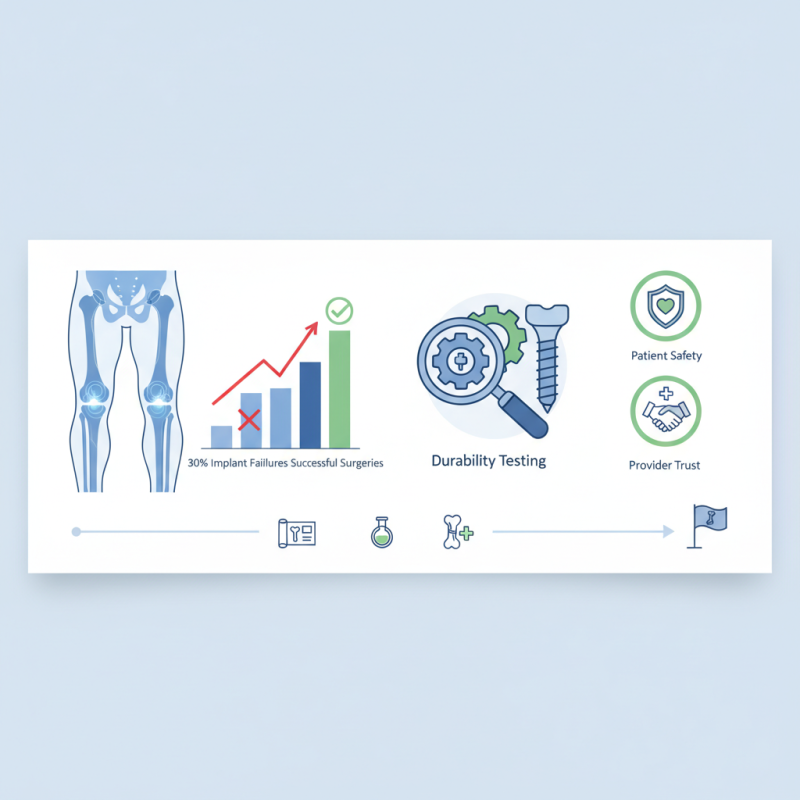
The importance of testing orthopedic implants for durability before purchase cannot be overstated. Orthopedic implants are critical for successful surgeries, affecting patient outcomes. According to a recent report by the Orthopedic Implant Association, up to 30% of implant failures can be attributed to material defects and inadequate durability testing.
Dr. Emily Chen, a renowned orthopedic expert, emphasizes this point: "Durability testing is essential to ensure the safety and longevity of implants." Her insights highlight the need for rigorous assessment. With the growing demand for these implants, understanding durability standards becomes crucial.
Testing for durability reveals potential weaknesses that may not be evident during initial assessments. Such evaluations can prevent costly recalls and improve patient trust. Manufacturers must prioritize these tests, as overlooked details could lead to serious complications. A comprehensive evaluation process helps establish standards that benefit both providers and patients, ultimately leading to better outcomes in orthopedic care.
Testing the fatigue resistance of orthopedic implants before purchase is crucial for ensuring patient safety. Fatigue failure occurs when an implant is subjected to repetitive loading. Studies indicate that over 60% of orthopedic implant failures are due to fatigue issues. Hence, rigorous pre-purchase testing becomes essential to prevent complications.
One effective testing method involves simulating the mechanical loads an implant would face in a typical clinical setting. This can be done using fatigue testing machines that apply cyclic loads to assess how long the implant can withstand stress. Data suggests that implants should undergo at least 5 million cycles of testing to accurately gauge fatigue performance. Engineers often analyze these results to determine the lifespan of the implant under various conditions.
However, even with advanced testing, challenges remain. Variability in materials and manufacturing processes can lead to inconsistencies. Unanticipated stress points may develop under real-life conditions that lab tests cannot predict. It is essential to reflect on these limitations and continuously improve testing methodologies. This ongoing refinement is key to enhancing the overall reliability of orthopedic implants, making pre-purchase testing not just necessary, but imperative.
When assessing the durability of orthopedic implants, understanding material properties is paramount. The mechanical strength of materials like titanium and stainless steel plays a significant role. These metals can withstand the high stresses within the human body. However, variations in alloy composition can lead to considerable differences in performance. Testing samples is crucial, as unseen flaws could diminish longevity.
Another key factor is fatigue resistance. Implants experience cyclic loads during daily activities. Over time, these loads can cause microscopic wear, leading to failure. Evaluating how materials respond to repeated stress is essential. Some promising materials may fail under specific conditions, raising concerns.
Biocompatibility is also a crucial aspect. Implants should not provoke adverse reactions in the body. This requires extensive testing, as reactions can vary widely among patients. While some materials excel in strength, they may cause irritation or inflammation. This unpredictable variability highlights the importance of thorough evaluation before purchase. It's clear that not all materials can withstand the rigors of body dynamics.
When considering orthopedic implants, durability is a crucial factor. Standardized testing methods are essential for evaluating the longevity of these medical devices. These procedures help ensure implants will withstand the rigors of daily use. Key tests include fatigue testing, static load testing, and dynamic impact testing. These provide insights into failure points and lifespan.
Testing methods often require large samples to produce reliable data. Variability can arise from manufacturing differences. It's vital to assess how the implant reacts under real-life conditions. Data from these tests must be transparent and accessible. Regulatory bodies may require this documentation prior to approval.
Tips: Always review testing protocols before choosing an implant. Understand the specific tests performed and their outcomes. Consider asking for data from independent sources to validate manufacturers' claims. Seek insights from orthopedic professionals who have experience in evaluating these tests. Your decision should be informed and based on comprehensive data.
The following chart displays the durability scores of various orthopedic implant testing methods. Each test evaluates the implant's longevity, highlighting the differences in performance metrics.
When considering the durability of orthopedic implants, analyzing clinical data is essential. Historical performance statistics provide insights into
how different implants withstand stress over time. Surgeons often review these statistics before making recommendations. The data reveals failure rates,
common complications, and longevity across various demographics. Such insights enable informed decisions for both patients and practitioners.
Tips: Look for studies from reputable medical journals. Clinical trials often publish their findings, revealing long-term
performance data. Cross-reference multiple sources to ensure reliability.
Performance analysis also yields important trends. Manufacturers may improve designs based on historical data, enhancing safety. However, not all implants perform equally. Some
implants may show promising short-term results but fail in the long run. It's crucial to stay vigilant and watch for red flags in any available
clinical reports.
Tips: Keep an eye on updated studies. Implant technology is constantly evolving. Maintaining awareness of recent
findings helps assess future options. Engaging with orthopedic specialists during the decision-making process can also provide personalized insights tailored to specific patient needs.
Testing the durability of orthopedic implants before purchase is essential. Rigorous testing protocols ensure that these implants can withstand the stresses of daily use. According to the Journal of Orthopedic Research, about 12% of implants fail within ten years due to material fatigue and inadequate testing. This data highlights the necessity for comprehensive evaluations.
Cost-benefit analysis reveals that investing in advanced testing methodologies can ultimately save costs. For instance, each failed implant can result in expenses exceeding $50,000, including revision surgeries and additional care. Testing protocols, such as cyclic loading tests and fatigue assessments, might seem costly initially. However, their long-term benefits outweigh these expenses by reducing failure rates and enhancing patient safety.
Tip: Always request detailed testing reports from suppliers. These reports should include data on material performance under various conditions.
Tip: Consider the type of stress and load the implants will face in real life. This information can narrow down choices.
Investments in proper testing reflect a commitment to quality. Incremental improvements in testing lead manufacturers to better designs and patient outcomes. Yet, existing protocols might not cover all variables. Keeping an eye on evolving testing techniques is crucial.
| Testing Method | Description | Estimated Cost | Time Required | Durability Insights |
|---|---|---|---|---|
| Fatigue Testing | Simulates long-term stress to assess the lifespan of the implant. | $15,000 | 3 weeks | Identifies potential failure points under cyclic loading. |
| Static Load Testing | Evaluates the implant’s strength under a single-load application. | $10,000 | 2 weeks | Assesses maximum load the implant can withstand. |
| Thermal Cycling | Tests implant durability under fluctuating temperature conditions. | $8,000 | 4 weeks | Reveals material behavior under thermal stress. |
| Corrosion Resistance Testing | Evaluates the implant material's performance in a corrosive environment. | $12,000 | 3 weeks | Determines the lifespan of implants when exposed to bodily fluids. |
| Biocompatibility Testing | Assesses how materials interact with biological tissues. | $20,000 | 5 weeks | Ensures safety and effectiveness in biological applications. |
: Titanium and stainless steel are popular for their mechanical strength. They can withstand high body stresses effectively.
Testing reveals unseen flaws that could affect longevity. Variations in alloy composition may significantly change performance.
Fatigue resistance refers to how materials endure cyclic loads during daily activities. Over time, this can lead to wear and potential failure.
Biocompatibility ensures implants do not provoke negative reactions in the body. Reactions can differ among patients, so thorough evaluation is vital.
Look for historical performance statistics, including failure rates and longevity. Analyze studies from reputable medical journals for reliable insights.
Comprehensive testing reduces failure rates, averting costly revision surgeries and additional care often exceeding $50,000 per failed implant.
Implant technology continuously evolves. Recent findings can influence decisions, leading to better outcomes for patients.
Existing protocols may not cover all variables influencing durability. Continuous review of testing methodologies is necessary to improve implant quality.
Specialists can provide personalized insights based on clinical data and specific patient needs, ensuring more informed choices.
Consider the type of stress and load implants will face. This understanding helps narrow down suitable options based on performance and safety.
When considering orthopedic implants, one key question arises: "Why is it important to test orthopedic implants for durability before purchase?" The assessment of an implant's fatigue resistance is crucial, as it directly influences patient outcomes and longevity of the device. Understanding material properties, including tensile strength and elasticity, plays a vital role in evaluating the durability of these implants.
Standardized testing methods, such as fatigue cycling and stress testing, provide valuable insights into an implant's lifespan and potential failure points. Furthermore, analyzing clinical data from historical performance statistics enhances our knowledge about the effectiveness and reliability of different implants over time. A comprehensive cost-benefit analysis of rigorous testing protocols highlights the trade-offs between initial costs and long-term patient satisfaction, ultimately underscoring the necessity for thorough durability assessments before making a purchase decision.

Marin-one Medical