2026 Top Orthopedic Implant Suppliers Why Batch Tests Matter?

Time:2026-10-12 Author:Liam
0%

In 2026, orthopedic implant sourcing is no longer driven by price alone. Hospitals and distributors need evidence that every production batch meets defined safety and performance requirements. This is where the question, “Why do orthopedic implants suppliers need to provide batch test reports,” becomes commercially and clinically important.

A batch test report connects a finished implant to its manufacturing history. It may record alloy grade, dimensional checks, surface condition, sterilization results, fatigue testing, and packaging inspection. It should also identify the lot number, test methods, acceptance criteria, and responsible reviewers. Dr. Joshua J. Jacobs, a recognized orthopedic implant researcher, has emphasized, “Quality must be built into every step, not inspected into the finished implant.” That principle sounds simple. It is not always practiced consistently.

For buyers, these reports support traceability, supplier evaluation, and informed risk assessment. They also help quality teams compare results across batches instead of trusting one attractive sample. A credible supplier should explain test limitations, laboratory competence, deviations, and corrective actions. Certificates without supporting data can create false confidence. I have seen how a missing lot reference can delay a basic investigation, even when the product appears perfect. That weakness deserves attention. The strongest suppliers combine validated procedures, trained inspectors, controlled records, and independent review where appropriate. Their documentation should align with applicable standards, such as ISO 13485 and relevant ASTM methods, while recognizing market-specific requirements. Batch reports do not guarantee clinical success. They provide disciplined evidence for better decisions. That evidence matters when a small manufacturing variation can affect surgical handling, implant fit, or long-term patient outcomes.
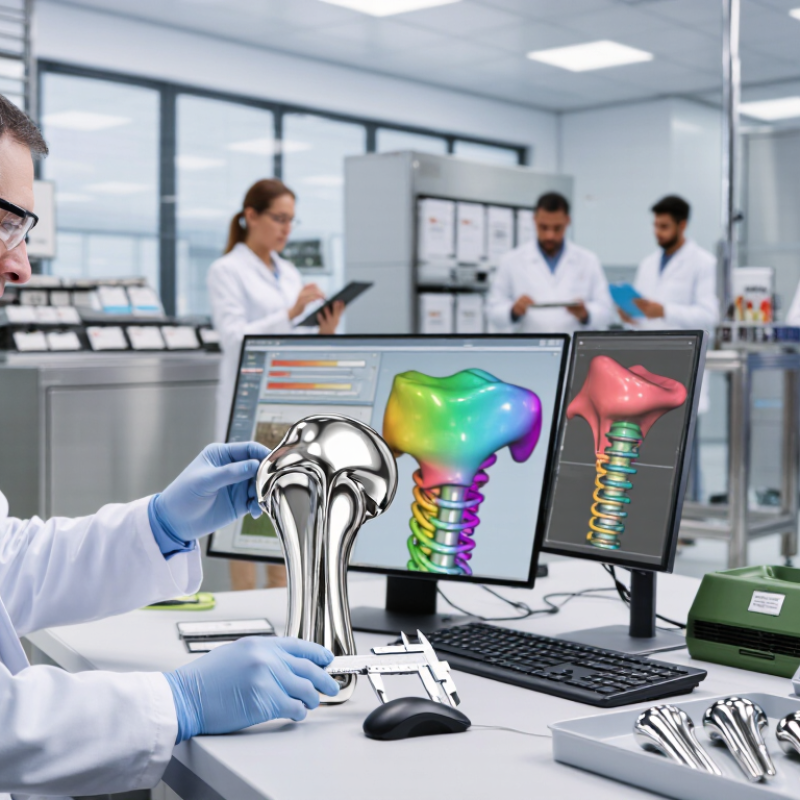
2026 Top Orthopedic Implant Suppliers Why Batch Tests Matter?

2026 Orthopedic Implant Supplier Landscape: ISO 13485 as a Baseline

In the 2026 orthopedic implant supplier landscape, ISO 13485 is a baseline, not a final approval. The standard establishes a quality management framework for risk control, traceability, process validation, and corrective action. It does not automatically prove that every implant batch is consistent. That distinction matters when devices enter complex surgical environments.

A reliable supplier should connect each lot to raw material certificates, machine settings, inspection results, and trained operators. Batch testing may include dimensional checks, surface inspection, chemical verification, and mechanical performance tests. The exact plan depends on the implant’s design and risk profile. Records tell the story. Auditors should examine timestamps, acceptance limits, sampling logic, and deviations. A missing signature may seem minor, but repeated gaps can reveal weak process discipline.

ISO 13485 certificates deserve careful review. Confirm the certification scope, issuing body, site location, and expiration date. Also ask how failed results are contained and investigated. A certificate can look reassuring while daily controls remain uneven. This is an uncomfortable point. Supplier evaluation should combine documents with technical conversations and, when appropriate, an on-site assessment. Small gaps matter. Batch testing cannot replace validated manufacturing, and certification cannot replace evidence from real production. Even experienced teams may overlook changes in tooling, packaging, or inspection software. That is where a thoughtful review becomes essential.

Material Verification: ASTM F136 Titanium and ISO 10993 Biocompatibility Tests

2026 Top Orthopedic Implant Suppliers: Why Batch Tests Matter?

Material verification begins with the implant’s actual alloy, not its packaging label. ASTM F136 specifies requirements for wrought titanium alloy used in surgical implants. A reliable supplier should connect each batch to heat numbers, chemical analysis, mechanical results, and traceable records. Small details matter. A missing mill certificate can weaken an otherwise strong quality file.

ISO 10993 biocompatibility evaluation examines biological risks from the finished device, its materials, and manufacturing residues. Test selection should reflect contact type, duration, sterilization, and surface treatment. It does not always mean repeating every test for every batch. A risk-based plan may combine validated processes, representative testing, and periodic confirmation. The uncomfortable part is that a certificate can look complete while leaving a gap between the tested sample and the delivered lot.

Tips: Ask for batch-specific evidence, not only general compliance statements. Check whether the report identifies the alloy grade, lot number, test method, laboratory, and acceptance criteria. Compare surface-cleaning records with the ISO 10993 evaluation. Ask what changed since the last biological assessment. No test plan is flawless. Careful review still catches preventable errors. Suppliers should explain unclear results without hiding behind technical language.

Batch Release Testing: Sterility Assurance Levels Target 10⁻⁶

For 2026 orthopedic implant suppliers, batch release testing is more than a paperwork step. It connects sterilization science with patient safety. A sterility assurance level (SAL) of 10⁻⁶ means a maximum theoretical probability of one non-sterile unit in one million sterilized units, when the process is properly validated.

The target begins with controlled manufacturing conditions. Teams monitor bioburden before sterilization, review load configuration, and confirm exposure parameters for every cycle. Packaging integrity also matters. A tiny seal channel can undermine an otherwise qualified process. Release decisions should include sterilization records, environmental results, biological or chemical indicators, and documented deviations.

Testing alone cannot prove every implant is sterile. Sampling has limits. This point is often overlooked. SAL describes process capability, not a direct inspection of each device. Reliable suppliers therefore combine routine batch testing with installation qualification, operational qualification, performance qualification, and periodic revalidation. They also investigate unusual trends instead of accepting borderline results because the batch “passed.”

A practical audit should trace one implant from raw material receipt to final release. Look for clear signatures, calibrated equipment, independent review, and controlled changes. One missing record matters. So does an unexplained delay. Quality systems are never perfect, and mature teams admit where evidence is weak, then correct it before distribution.

Why batch release testing matters: For terminally sterilized orthopedic implants, a Sterility Assurance Level (SAL) of 10⁻⁶ represents a theoretical probability of not more than one non-sterile unit in one million sterilized units. Batch release decisions should combine validated sterilization-cycle data, process records, dosimetry or biological-indicator evidence where applicable, packaging integrity, and defined quality controls. A routine sterility test alone cannot demonstrate an SAL of 10⁻⁶.
Reference framework: ISO 11135 for ethylene oxide sterilization, ISO 11137 for radiation sterilization, ISO 17665 for moist-heat sterilization, and ISO 20857 for dry-heat sterilization. These standards commonly use an SAL target of 10⁻⁶ for terminal sterilization of medical devices when justified by the validated process.

Fatigue and Wear Testing: ASTM Standards for Millions of Load Cycles

2026 Top Orthopedic Implant Suppliers: Why Batch Tests Matter?

Fatigue and wear testing reveal how an implant behaves after millions of repeated loads. ASTM F1717 evaluates spinal implant constructs under cyclic compression. ASTM F1800 addresses cyclic fatigue in metal tibial tray components. These tests turn laboratory evidence into measurable endurance data.

A knee implant may experience thousands of steps daily, including stairs, squats, and sudden impacts. Over years, tiny scratches can become wear particles, while small alignment errors may increase stress. ISO 14243 supports knee wear evaluation, while ISO 14242 addresses hip-joint wear. Together, these methods help laboratories compare designs under controlled conditions.

The American Joint Replacement Registry’s 2024 Annual Report covered more than three million hip and knee procedures, showing the scale of long-term implant monitoring. Batch testing matters because identical-looking parts can respond differently to machining variation, surface finish, or heat treatment. A passing prototype proves little by itself.

The uncomfortable truth is that fatigue curves are not perfect predictions of human life. Body weight, activity, anatomy, and surgical positioning vary widely. Therefore, reliable suppliers should test multiple production batches, document failures, and investigate unusual wear patterns. One polished graph is not enough. Consistency matters.

Supplier Qualification: Traceability, Lot Records, and FDA QMSR Compliance

2026 Top Orthopedic Implant Suppliers: Why Batch Tests Matter

Supplier Qualification: Traceability, Lot Records, and FDA QMSR Compliance

Choosing an orthopedic implant supplier requires more than comparing prices or catalog images. A qualified supplier should connect every batch to approved materials, operators, equipment, and test results. During an audit, reviewers may request the lot record within minutes. Missing signatures, unclear revision numbers, or unexplained retesting can weaken confidence. Batch testing is not paperwork decoration. It shows whether production stayed consistent, especially when implants require strict dimensional, mechanical, or cleanliness checks.

Under FDA QMSR, effective February 2, 2026, manufacturers must maintain quality systems aligned with ISO 13485 requirements and applicable FDA obligations. Supplier controls therefore need documented evaluation, monitoring, and re-evaluation. Ask for objective evidence, including material certificates, relevant sterilization records, nonconformance reports, change notifications, and complete lot traceability. A strong record follows the product from incoming material to final release. It should identify who approved each step and why.

A site visit can reveal details that spreadsheets miss. Look for labeled containers, controlled sampling tools, calibrated gauges, and records matching the physical lot. One uncomfortable lesson is that a clean audit package may still hide weak shop-floor habits. Review multiple batches, not only the best example. Suppliers can make honest mistakes. The important question is whether deviations are detected, investigated, and prevented from recurring.

2026 Top Orthopedic Implant Suppliers Why Batch Tests Matter? — Supplier Qualification: Traceability, Lot Records, and FDA QMSR Compliance
No. Supplier Qualification Dimension Objective Evidence to Review Batch or Lot-Level Verification Required Record Elements Risk if Incomplete Review Priority
1 Quality management system Current quality certification or regulatory inspection history; controlled procedures; internal audit results; management review records; documented corrective and preventive action process. Confirm that the lot was manufactured under the approved quality system and that required in-process and final inspections were completed before release. Approved procedures, training records, audit reports, nonconformance records, CAPA references, quality release authorization, and change-control history. High Critical
2 Regulatory quality-system alignment Evidence of alignment with FDA Quality Management System Regulation requirements under 21 CFR Part 820, which incorporates ISO 13485:2016 by reference, effective February 2, 2026. Verify that device-specific production, inspection, complaint, record-retention, and change-control activities are covered by controlled procedures. QMS scope, quality manual or equivalent system description, procedure cross-reference, training evidence, audit findings, and remediation records. High Critical
3 Material identity and grade Approved material specification, supplier certificate, certificate of analysis, material standard reference, and documented incoming inspection method. Review heat, melt, cast, or material batch identification; verify chemical composition and applicable mechanical-property results against the approved specification. Material certificate, laboratory report, lot number, heat or melt number, sample identification, test method, equipment identification, and reviewer approval. High Critical
4 Dimensional conformity Approved drawings, tolerances, inspection plans, calibrated measurement equipment, and qualified inspection personnel. Perform documented sampling or 100% inspection where required for critical dimensions, interfaces, holes, tapers, threads, and mating features. Drawing revision, characteristic number, nominal value, tolerance, actual result, sample size, measurement device ID, calibration status, and acceptance decision. High Critical
5 Surface condition and finish Surface-finish specification, visual inspection criteria, roughness measurement procedure, cleaning validation, and coating or treatment qualification where applicable. Inspect each lot for burrs, residue, discoloration, scratches, surface defects, roughness, coating coverage, and treatment parameters according to the approved device specification. Inspection checklist, photographs where required, roughness results, treatment batch record, operator identification, equipment parameters, and deviation disposition. Medium to High High
6 Mechanical performance Design verification and validation reports; validated test methods; equipment calibration; laboratory competency; and applicable device-specific acceptance criteria. Conduct required batch testing, such as tensile, torque, fatigue, pull-off, or locking-mechanism testing, only when specified by the device risk assessment and approved test plan. Test article IDs, lot number, specimen orientation, conditioning, test method revision, raw data, calculations, equipment ID, environmental conditions, and final conclusion. High Critical
7 Biocompatibility and material-contact control Biological evaluation plan, material and process history, sterilization or cleaning information, extractables assessment where applicable, and supplier change notifications. Confirm that the tested lot uses the same material, surface treatment, cleaning process, and manufacturing conditions covered by the biological evaluation. Material and process traceability, biological evaluation reference, cleaning records, chemical residue results where applicable, and change-assessment decision. High Critical
8 Cleaning and particulate control Validated cleaning process, process parameters, residue limits, environmental controls, inspection criteria, and cleaning-agent qualification. Verify cleaning-cycle parameters and perform applicable visual, gravimetric, chemical-residue, or particulate testing using validated methods. Cleaning batch record, equipment ID, cycle parameters, detergent lot, rinse quality, test results, analyst details, and release approval. High Critical
9 Sterilization and sterile-barrier interface Sterilization validation or contract-sterilization qualification, packaging validation, environmental monitoring where applicable, and transport simulation evidence. Confirm that the lot was processed under the validated cycle and that packaging integrity, seal parameters, and sterilization records meet approved requirements. Sterilization load number, cycle record, biological or physical indicator results where applicable, packaging lot, seal inspection, and release decision. High Critical
10 Unique device and lot traceability Traceability matrix linking raw materials, components, work orders, operators, equipment, inspection results, packaging, and shipment records. Select a finished-device lot and trace it backward to raw material and process records, then forward to packaging, distribution, and customer or healthcare-facility records where applicable. Lot or serial number, work-order number, material identifiers, process dates, equipment IDs, inspection status, packaging identifiers, and shipment details. High Critical
11 Electronic records and data integrity Validated computerized systems, role-based access, audit trails, backup and recovery controls, electronic-signature controls, and documented data-review procedures. Confirm that batch results are attributable, legible, contemporaneous, original or verified copies, accurate, complete, consistent, enduring, and available throughout the retention period. Audit-trail review, user access history, electronic approval, raw-data location, revision history, backup evidence, and exception reports. High Critical
12 Nonconformance and CAPA management Nonconformance procedure, root-cause methodology, effectiveness checks, trend analysis, complaint linkage, and documented product-disposition authority. Check whether any failed batch test, process deviation, complaint, or supplier issue is linked to the affected lot and whether release was blocked until disposition. Nonconformance number, affected lot, containment action, investigation, root cause, risk assessment, disposition, CAPA reference, and effectiveness result. High Critical
13 Change control and requalification Formal change-control procedure covering materials, drawings, suppliers, equipment, software, processes, test methods, packaging, and labeling. Determine whether the tested lot was produced before or after a change and verify the documented impact assessment, validation, verification, and regulatory evaluation. Change request, reason for change, affected products and lots, risk assessment, validation protocol and report, approval signatures, and implementation date. High Critical
14 Supplier and subcontractor control Approved supplier list, supplier risk classification, quality agreement, performance scorecards, audit records, and oversight of special-process providers. Confirm that each critical outsourced process, including coating, heat treatment, cleaning, sterilization, or testing, is linked to the finished-device lot. Subcontractor lot number, purchase order, process certificate, inspection result, quality agreement, approval status, and supplier performance history. High Critical
15 Record retention and retrieval Record-retention procedure, secure storage controls, backup plan, retrieval testing, controlled disposal, and retention periods consistent with applicable requirements and agreements. Request a historical lot package and measure whether all required records can be retrieved, read, authenticated, and reconciled without unexplained gaps. Record index, storage location, retention category, access log, retrieval date, document revision, approval status, and archive or destruction authorization. Medium to High High
16 Complaint, field action, and recall readiness Complaint-handling procedure, adverse-event escalation, field-action process, mock-recall results, distribution records, and regulatory reporting controls. Use a sample lot to verify the time and accuracy of retrieval from finished inventory, shipment records, affected customers, and related raw-material or process records. Complaint reference, device identifier, lot or serial number, distribution history, investigation record, reportability decision, and effectiveness check. High Critical
Qualification note: Batch-test frequency, sample size, acceptance criteria, and release requirements must be established from the device-specific design history, risk-management file, validated processes, applicable consensus standards, approved specifications, and regulatory commitments. Generic sampling values should not replace a validated inspection plan.

FAQS

What does ISO 13485 show about an orthopedic implant supplier?

It shows a quality management framework. The framework covers risk control, traceability, validation, and corrective action. It does not prove every implant batch is consistent. Daily production evidence still matters.

What records should a supplier provide for each implant batch?

Each lot should connect to raw material certificates and machine settings. Inspection results and operator training records should also be available. Timestamps, acceptance limits, sampling logic, and deviations deserve close review. Records tell the story.

How should an ISO 13485 certificate be reviewed?

Check its scope, issuing body, site location, and expiration date. Ask how failed results are contained and investigated. A certificate may look reassuring while daily controls remain uneven. That is uncomfortable, but important.

Why are batch tests necessary when a supplier already has certification?

Certification describes the management system, not every finished implant. Batch tests can detect dimensional, surface, chemical, and mechanical differences. Machining variation or heat treatment may affect similar-looking parts. One certificate cannot replace production evidence.

What does fatigue testing reveal about an implant?

Fatigue testing examines repeated loading over millions of cycles. It can reveal weakness in spinal constructs or metal joint components. Laboratory cycles provide measurable endurance data. They are useful, not perfect predictions.

How do wear tests support hip and knee implant evaluation?

Wear tests simulate repeated joint movement under controlled conditions. They can identify particles, surface damage, and performance changes. Tiny scratches may grow after years of walking or climbing stairs. Small alignment errors matter.

Why should suppliers test multiple production batches?

A successful prototype may not represent routine manufacturing. Different batches can respond differently to machining, surfaces, or heat treatment. Multiple tests help reveal variation and unusual wear patterns. Consistency matters.

What should auditors investigate during an on-site assessment?

Auditors should compare documents with actual production practices. They can review tooling changes, packaging controls, inspection software, and operator records. A missing signature may seem minor. Repeated gaps may reveal weak process discipline. No review is flawless.

Conclusion

In 2026, reliable orthopedic implant suppliers should meet ISO 13485 requirements and demonstrate consistent control across design, manufacturing, and quality management. Material verification is essential, including confirmation of ASTM F136 titanium properties and applicable ISO 10993 biocompatibility testing. These evaluations help ensure that implant materials are suitable for their intended clinical use and perform consistently from one production lot to the next.

Why do orthopedic implants suppliers need to provide batch test reports? Batch reports provide documented evidence that each lot has passed critical release checks, including sterility assurance targeting a 10⁻⁶ safety level, dimensional inspection, and relevant chemical or biological assessments. Fatigue and wear testing against applicable ASTM methods can demonstrate durability over millions of loading cycles. In addition, strong suppliers maintain complete traceability, lot records, test data, and supplier qualification documents, supporting transparent audits and alignment with FDA QMSR expectations. Together, these practices reduce variability, strengthen confidence, and support safer orthopedic implant sourcing.

Liam

Liam

Liam is a dedicated marketing professional with a profound expertise in the industry, where he excels at highlighting the unique advantages of our core products. With a keen understanding of market trends and consumer needs, Liam frequently updates our company’s professional blog, providing......