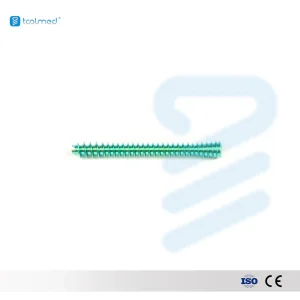
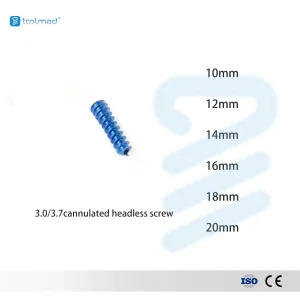
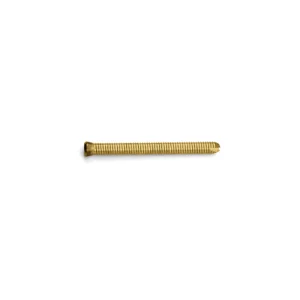
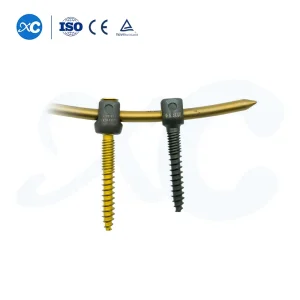
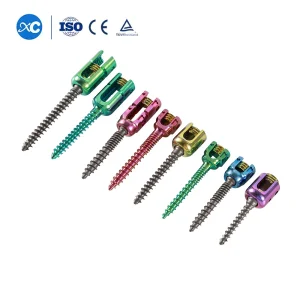
The global orthopedic market has witnessed a paradigm shift toward minimally invasive surgeries (MIS). At the heart of this revolution is the Cannulated Pedicle Screw. Unlike traditional solid screws, cannulated versions feature a hollow center that allows them to be guided over a K-wire, ensuring pinpoint accuracy in complex spinal fusions. This industrial evolution has been driven by the increasing prevalence of degenerative disc diseases and the aging global population.
Currently, North America and Europe hold a significant market share due to advanced healthcare infrastructure. However, the Asia-Pacific region, led by China, is rapidly becoming the global manufacturing hub. Chinese manufacturers have transitioned from low-end production to high-tech R&D, competing directly with Western giants like Stryker and Medtronic. The industrial status of these screws is no longer just about "hardware"; it’s about the integration of biocompatible Grade 5 Titanium (Ti-6Al-4V ELI) and precision CNC machining that meets international standards like ISO 13485 and CE certification.
The integration of AI and robotic guidance systems requires screws with extremely tight tolerances. Cannulated designs are the "gold standard" for robotic spine surgery, facilitating seamless guide-wire transitions.
For patients with osteoporosis, "injectable" cannulated screws allow bone cement (PMMA) to be delivered directly through the screw's hollow core into the vertebral body, significantly enhancing fixation strength.
Advanced coatings like Hydroxyapatite (HA) or roughened 3D-printed surfaces are being applied to cannulated screws to accelerate osseointegration, reducing recovery times for patients.
Procurement officers in hospitals and medical device distributors across Latin America, the Middle East, and Southeast Asia are increasingly seeking high-quality, cost-effective alternatives to expensive Western brands. The demand is focused on Versatility and Customization. Localized application scenarios vary: in developing regions, the need is for robust, universal spinal systems that can handle a variety of trauma cases, while in developed urban centers, the demand leans toward specialized CMF (Craniomaxillofacial) and injectable systems.
China-based factories are uniquely positioned to meet these needs by offering OEM & ODM services. Whether it's a specific thread pitch for a regional surgical technique or localized regulatory compliance assistance, Chinese manufacturers provide the flexibility that large conglomerates often lack.
Years of R&D
Product Series
Global Partners
Quality Inspected
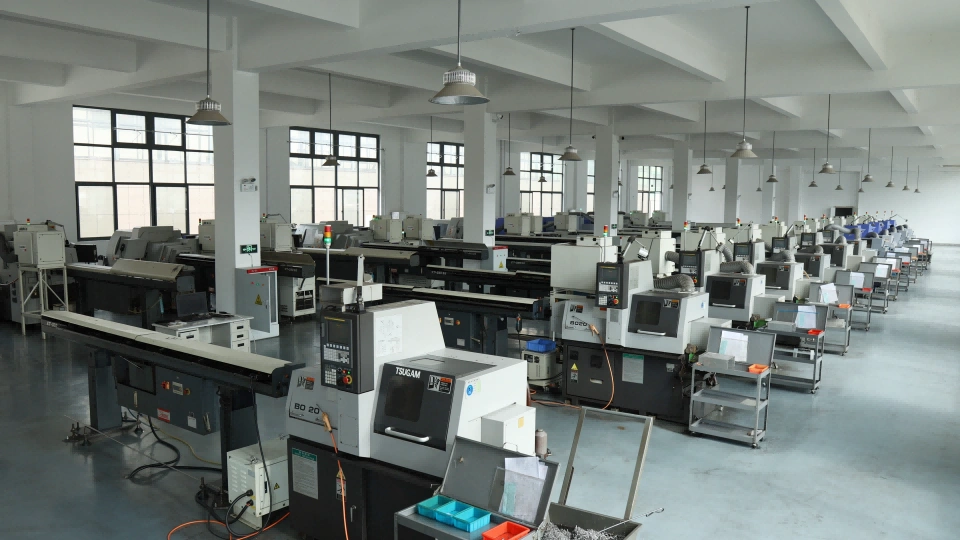
As a leading China Cannulated Pedicle Screws Manufacturer, our facility integrates AI-driven manufacturing processes with human expertise. Our advantages include:
Guangdong Marin-one Medical Devices Co., Ltd. is specialized in manufacturing Orthopedic Implant and instruments, a diversified model of Research and development, production, sales, export. The company has perfect quality management system and advanced production capacity. After more than 18 years research and development, we have about 11 main product series and they are Spinal system, Intramedullary Nail system, Trauma plate and screw system, Locking Plate and screw system, CMF Maxillofacial system, External Fixation, Joint system, Medical Power Tool system, general surgical instruments system, Sterilization Box & basket, veterinary orthopedic etc.
In the principle of "quality first, service first, R&D first, innovation first", the company wins an excellent reputation both in domestic and abroad. Customer satisfaction is the purpose of our service. Since the establishment of the company, all employees have consistently adhered to the business philosophy of "sincere service, continuous improvement", adhered to the service tenet of customer centeredness, pursuit of nobility, attention to details, and reputation first.
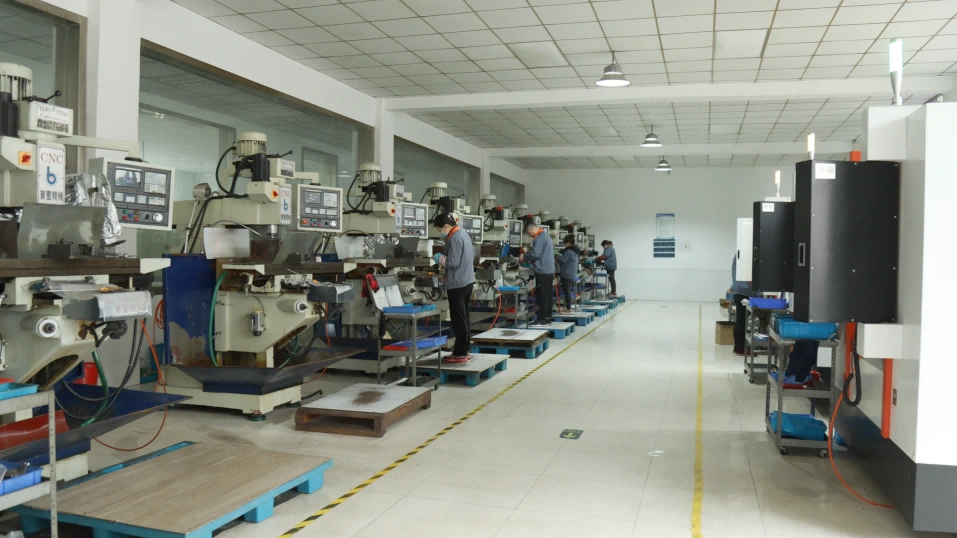
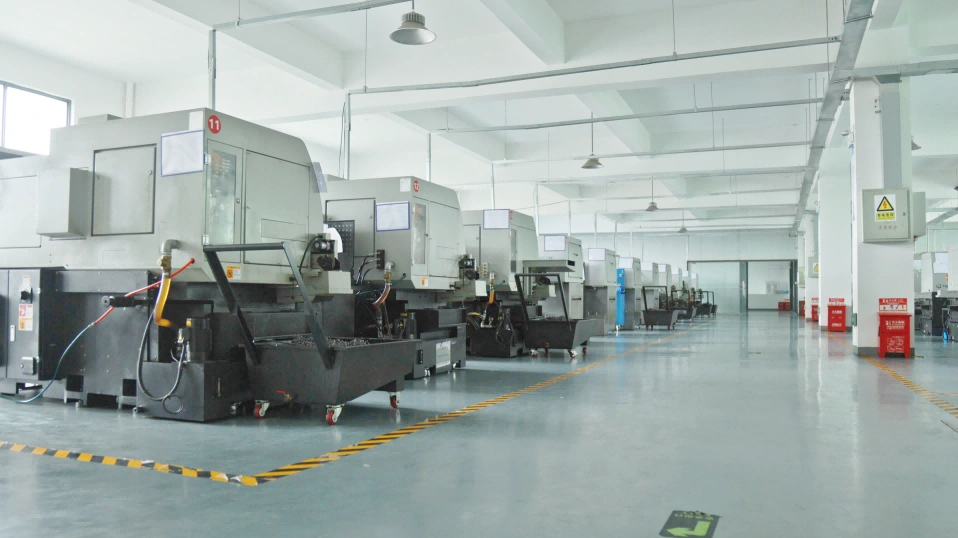
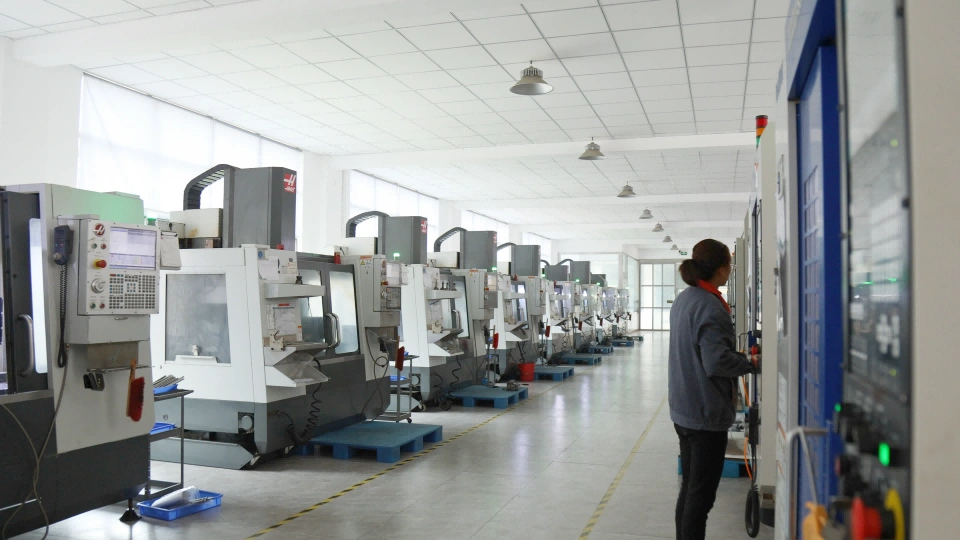
Spinal fusion procedures require the utmost precision to avoid neurological complications. The cannulated pedicle screw provides a "road map" for surgeons. By first inserting a thin K-wire under fluoroscopic guidance, the surgeon can confirm the path before the larger screw is introduced. This method significantly reduces the risk of pedicle wall breach, which is critical in the thoracic spine where the margin of error is less than 2mm.
Our screws feature a double-lead thread design, which doubles the speed of insertion, reducing time under anesthesia for the patient. Furthermore, the self-tapping tip design eliminates the need for separate tapping in most bone types, preserving the integrity of the cancellous bone and increasing pull-out strength.
We utilize Titanium Alloy (TC4 ELI) for our spinal systems. This material is chosen for its superior biocompatibility, high strength-to-weight ratio, and MRI compatibility. Unlike stainless steel, titanium allows for better post-operative imaging with fewer artifacts, enabling surgeons to monitor the fusion process more effectively.
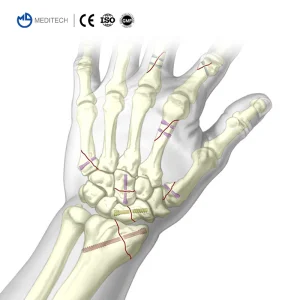
In trauma cases, speed and accuracy are vital. Our cannulated screws are often used in percutaneous stabilization where large incisions are avoided. For the geriatric population, our bone-cement injectable screws provide a life-changing solution for spinal fractures caused by osteoporosis, providing immediate stability and pain relief.
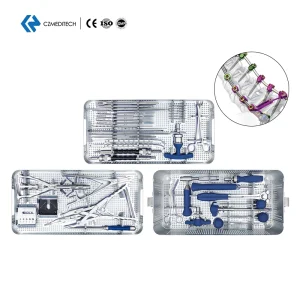
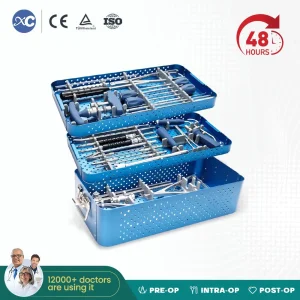
Our commitment to being the best cannulated pedicle screws factory means we don't just sell products; we provide solutions. We offer comprehensive surgical instrument sets specifically designed to complement our screw systems. This "total solution" approach ensures that hospitals have everything they need for a successful procedure, from the initial guide-wire insertion to the final tightening of the set screw.
We invite global distributors and hospital procurement teams to contact us for bulk inquiries and custom manufacturing requests. Experience the precision of Chinese orthopedic engineering with Guangdong Marin-one Medical Devices.
 Marin-one Medical